Irish formÓ hÓgáin
Meaning'descendant of Ógán' (diminutive of óg, young)
CountiesTipperary, Cork, Limerick, Clare
Other spellings1
Origin of the Hogan name
Woulfe gives two Ó hÓgáin families: (1) a Dalcassian family descended from Coscrach, uncle of Brian Boru, seated at Ardcrony, about four miles north of Nenagh, Co. Tipperary; (2) a family of the Corca Laoighdhe in south-west Co. Cork. Now very common in Munster. Woulfe also lists Hogan among forms of Ó hAodhagáin.[1][2]
- 1690'O HOGAN' appears in Sir James Terry's list of Irish septs.[7]
- 1800Sculptor John Hogan born at Tallow, Co. Waterford.[8]
- 1824John Hogan reaches Rome on Palm Sunday to study sculpture.[8]
- 1837Hogan completes the statue of Bishop Doyle for Carlow Cathedral.[8]
- 1858John Hogan dies, 27 March; buried in Glasnevin Cemetery.[8]
- 1890193 Hogan births registered, chiefly Tipperary, Dublin, Limerick, Clare and Cork.[5]
Hogan surname: questions
What does the surname Hogan mean?
Woulfe gives Hogan as the anglicised form of Ó hÓgáin, 'descendant of Ógán', Ógán being a diminutive of óg, young.[1]
Where in Ireland is the Hogan name from?
Woulfe places the Dalcassian Ó hÓgáin family at Ardcrony, near Nenagh, Co. Tipperary, and another family in south-west Cork. In 1890 Hogan births were found chiefly in Tipperary, Dublin, Limerick, Clare and Cork.[1][5]
Is Hogan related to Brian Boru?
Woulfe says the Dalcassian Ó hÓgáin family derive their descent from Coscrach, uncle of Brian Boru. That applies to that family, not to every Hogan.[1]
How common is the surname Hogan in Ireland?
In Matheson's table for 1890 Hogan was 91st among the principal surnames of Ireland, with an estimated 8,600 people.[4]


 Ohogan Coat Of Arms - Irish Family Crest Classic Cap£26.00
 Ohogan Coat Of Arms - Irish Family Crest St Patrick's Day Classic Cap£33.00
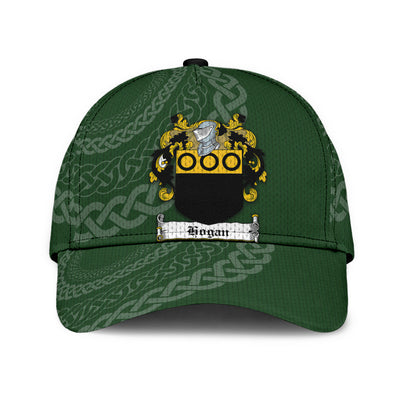 Hogan Coat Of Arms - Irish Family Crest St Patrick's Day Classic Cap£33.00