Irish formMac Fhlannchadha, Mac Fhlannchaidh
Meaning'son of Flannchadh' (ruddy-warrior)
CountiesClare, Leitrim, Galway, Tipperary
Other spellings4
Origin of the Clancy name
Two families, per Woulfe: (1) an ancient Co. Leitrim family, chiefs of Dartry, now the barony of Rosclogher, seated at Rosclogher and Dungarbry; (2) a Thomond family, a branch of the MacNamaras, hereditary brehons or judges to the O'Briens, at Knockfin and Cahermaclancy in north-west Co. Clare.[1]
- 1241Donnell Mac Clancy, Chief of Dartry, died.[5]
- 1483Conor Oge Mac Clancy, Ollav of Thomond, died; Hugh Mac Clancy succeeded him.[6]
- 1492Hugh Mac Clancy, Chief Brehon and Professor of Law in Thomond, died.[6]
- 1578John Mac Clancy, Chief Brehon to the Earl of Desmond, died.[7]
- 1585Four Masters: Boethius Mac Clancy, second Knight of Parliament elected for Clare.[8]
- 1890100 birth entries (95 spelled Clancy); chiefly Clare, Leitrim, Galway and Tipperary.[2][10]
Clancy surname: questions
What does the surname Clancy mean?
Woulfe gives Clancy as a form of Mac Fhlannchadha, 'son of Flannchadh', a personal name he glosses as 'ruddy-warrior'.[1]
Is Clancy an Irish name?
Yes. Woulfe lists Clancy, MacClancy and Clanchy as anglicised forms of the Irish surname Mac Fhlannchadha.[1]
Where in Ireland is the Clancy name from?
Woulfe names two families: chiefs of Dartry in Co. Leitrim, and hereditary brehons to the O'Briens in north-west Co. Clare. In 1890 Clancy births were found chiefly in Clare, Leitrim, Galway and Tipperary.[1][2]
Were the Clancys brehons?
Yes. Woulfe says the Thomond family were hereditary brehons or judges to the O'Briens, and the Annals of the Four Masters record Hugh Mac Clancy (d. 1492) as Chief Brehon and Professor of Law in Thomond.[1][6]


 Clancy Coat Of Arms - Irish Family Crest Classic Cap$33.45
 Oclancy Coat Of Arms - Irish Family Crest St Patrick's Day Classic Cap$42.45
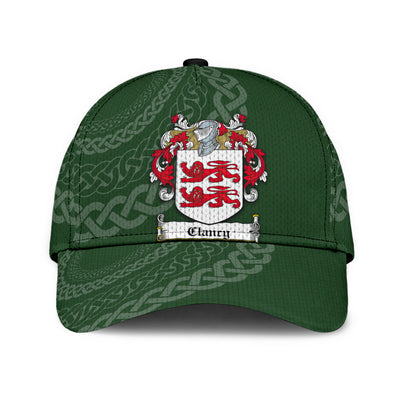 Clancy Coat Of Arms - Irish Family Crest St Patrick's Day Classic Cap$42.45
 Oclancy Coat Of Arms - Irish Family Crest Classic Cap$33.45