Irish formde Grae
MeaningNorman 'de Grey' (of Grey, some spot in England, probably) or Norman 'le Grey' (the grey, from the colour of the hair)
CountiesAntrim, Down, Londonderry and Dublin
Other spellings1
Origin of the Grey name
Woulfe: Norman 'de Grey' ('of Grey, some spot in England, probably') or Norman 'le Grey' ('the grey, from the colour of the hair'); 'both forms occur in early Irish records, but de Grey was by far the more common.'[1]
- 1535Webb: Lord Leonard Grey is appointed Lord-Justice of Ireland in January.[7]
- 1541Webb: Lord Leonard Grey is executed on 28 July after conviction on charges including intimacy with native chieftains.[7]
- 1580Webb: Sir Arthur Grey, Lord Wilton, lands in Dublin on 12 August as Lord-Deputy.[8]
- 1580Woulfe (Eustace entry): James Eustace and allies inflict a crushing defeat on Lord Grey at Glenmalure, in the autumn.[4]
- 1798Webb: Bessie Grey carries a green flag at the battle of Ballynahinch on 13 June and perishes in the retreat.[9]
- 1890Matheson: 117 birth entries for Gray including spelling varieties (97 spelled Gray), Ulster 70.[5]
Grey surname: questions
Is Grey an Irish name?
Woulfe gives Grey and Gray under de Grae, as a Norman name (Norman 'de Grey' or 'le Grey'), both found in early Irish records. He separately prints Irish-language names, Liath and Mac Cúilriabhaigh, that have Grey or Gray as an English form.[1][2][3]
What does the surname Grey mean?
Woulfe gives two Norman sources: 'de Grey', 'of Grey, some spot in England, probably', and 'le Grey', 'the grey, from the colour of the hair'.[1]
Is Grey the same name as Gray?
Woulfe prints Grey and Gray together under de Grae, and Matheson's 1901 list prints Grey among the varieties under Gray.[1][6]
Where in Ireland were people named Gray found in 1890?
Matheson found Gray 'principally' in Antrim, Down, Londonderry and Dublin; 70 of the 117 entries (including spelling varieties) were in Ulster.[5]


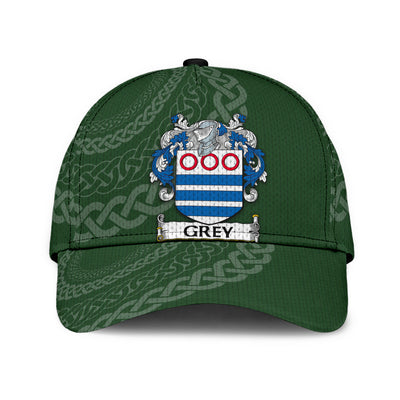 Grey Coat Of Arms - Irish Family Crest St Patrick's Day Classic Cap$42.45