Irish formÓ Conchobhair
Meaning'descendant of Conchobhar' (high-will or desire, an ancient Irish personal name)
CountiesRoscommon, Offaly, Kerry, Clare
Other spellings3
Origin of the O'Connor name
Woulfe lists at least six families: Connacht (from Conchobhar, King of Connacht, late 10th century; branches Ó Conchobhair Donn, Ruadh and Sligeach); Offaly (stronghold Dangan); Kerry (Iraghticonor, stronghold Carrigafoyle); Corcomroe in west Clare; Keenaght in Co. Derry; and Ui Breasail, a branch of the Oirghialla.[1]
- 979Death of Conchobhar, son of Fionn, lord of Offaly, who named the Offaly O'Connors.[1]
- 1002Conchobhar, lord of Corcomroe, who named the Clare O'Connors, slain.[1]
- 1126–1156Turlough O'Conor holds the nominal sovereignty of Ireland, according to Keating.[4]
- 1166Roderic O'Conor inaugurated King of Ireland.[6]
- 1175Treaty of Windsor with Henry II 'is said to have been entered into' (Webb).[6]
- 1198Roderic O'Conor dies at the Abbey of Cong.[6]
- 1766Charles O'Conor of Belanagare publishes 'Dissertations on the History of Ireland'.[5]
O'Connor surname: questions
What does the surname O'Connor mean?
Woulfe gives Ó Conchobhair, 'descendant of Conchobhar', an ancient Irish personal name he explains as 'high-will or desire'.[1]
Is O'Connor one family?
No. Woulfe records at least six distinct families: in Connacht, Offaly, Kerry, Corcomroe (Co. Clare), Keenaght (Co. Derry) and Ui Breasail.[1]
Are Connor, Connors and O'Conor the same name as O'Connor?
Woulfe lists O'Conor, O'Connor, Connor and Connors among the English forms of Ó Conchobhair. He calls the head of the Connacht family The O'Conor Don. In the 1890 birth indexes Matheson counted 432 Connor entries and, separately, 266 O'Connor.[1][2][3]
Were the O'Connors kings of Ireland?
Woulfe says two of the Connacht O'Connors became kings of all Ireland. Webb's Compendium covers Turlough O'Conor (nominal sovereign 1126–1156) and his son Roderic, the last Monarch of Ireland.[1][4][6]


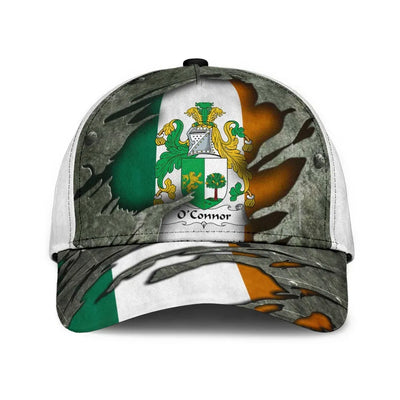 Oconnor Coat Of Arms Sligoarms - Irish Family Crest Classic Cap$33.45
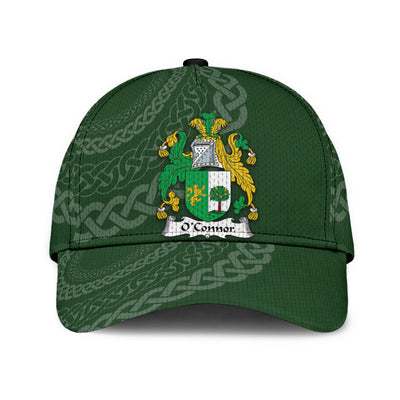 Oconnor Coat Of Arms Sligoarms - Irish Family Crest St Patrick's Day Classic Cap$42.45
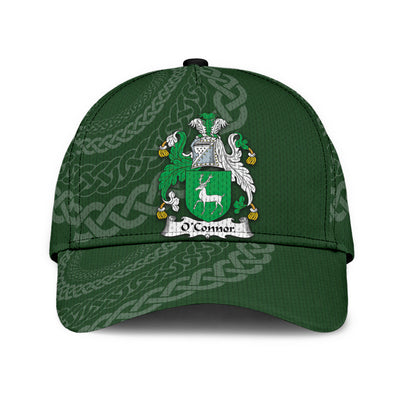 Oconnor Coat Of Arms - Irish Family Crest St Patrick's Day Classic Cap$42.45
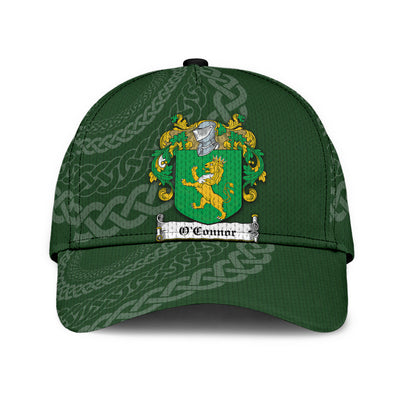 Oconnor Coat Of Arms Kerryarms - Irish Family Crest St Patrick's Day Classic Cap$42.45
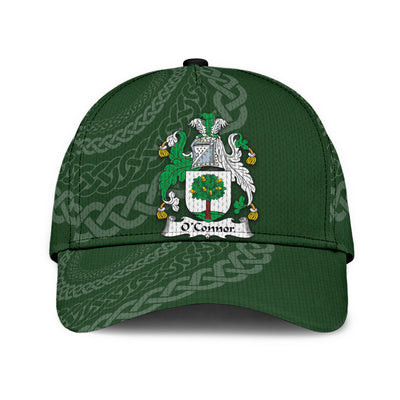 Oconnor Coat Of Arms Kings Of Connaughtarms - Irish Family Crest St Patrick's Day Classic Cap$42.45
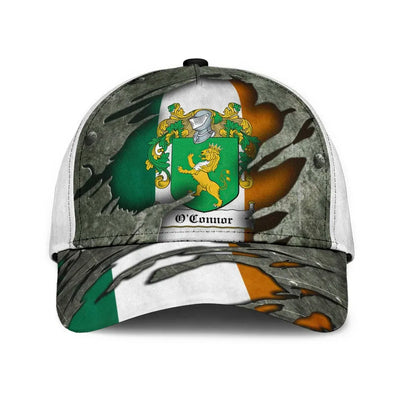 Oconnor Coat Of Arms Kerryarms - Irish Family Crest Classic Cap$33.45
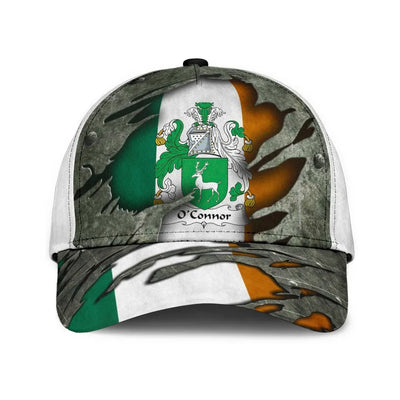 Oconnor Coat Of Arms - Irish Family Crest Classic Cap$33.45